
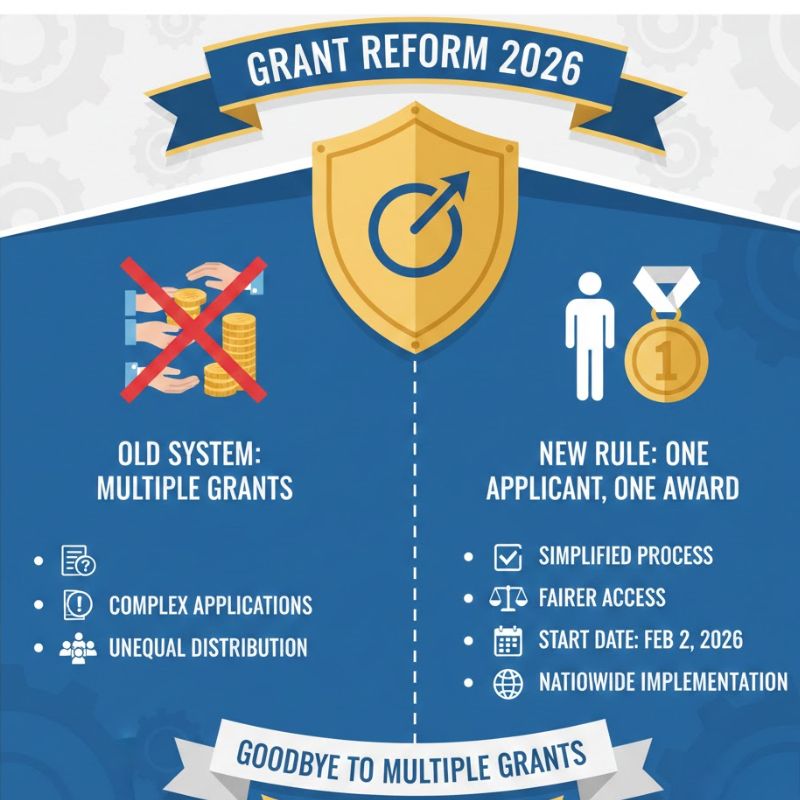
From 2 February 2026, South Africa’s social support system enters a major transition as the one-person-one-grant rule takes effect nationwide. This change means individuals will no longer be able to receive more than one social grant at the same time, even if they previously qualified under different categories. The policy is aimed at tightening oversight, improving fairness, and ensuring limited public funds reach as many vulnerable households as possible. For millions who rely on SASSA support, understanding how this rule works is essential to avoid payment disruptions.

How the One-Person-One-Grant Policy Works
The new framework limits beneficiaries to a single active grant, regardless of overlapping eligibility. Authorities say this will reduce duplicate grant access, strengthen system-wide fairness, and improve budget allocation control. Under the updated rules, SASSA systems will automatically flag cases where one person appears under multiple grants. In such situations, beneficiaries may be asked to choose the most appropriate option based on their current circumstances. Officials emphasize that the change is not designed to punish recipients, but to ensure support reaches households that need it most while maintaining transparent welfare processes.

Who Is Most Affected by Multiple Grant Limits
The rule mainly affects individuals who previously received overlapping support, such as a care-related grant alongside temporary relief. Groups under review include caregivers, older adults, and recipients with changing employment status. SASSA notes that eligibility reassessment checks will play a key role in determining which grant remains active. While some may see adjustments, the goal is to protect long-term income stability and prevent unintentional overpayments. Beneficiaries are encouraged to keep records updated to avoid payment interruption risks and ensure their chosen grant reflects their most pressing needs.
 NSFAS Loan Forgiveness Starts 4 February: 67,000 Students Get Debt Relief and Next Steps to Follow
Steps Beneficiaries Should Take Before February 2026
Preparation is critical ahead of the rollout. Beneficiaries should review their current grants and confirm personal details through official channels. SASSA recommends early action to avoid last-minute system flags or account verification delays. Visiting local offices or using online services can help clarify which grant will remain active. Staying informed supports smooth transition planning and reduces unexpected payment gaps. Clear communication ensures recipients stay aligned with updated compliance rules as the new policy takes effect nationwide.
What This Change Means for Social Support
Overall, the one-person-one-grant rule signals a shift toward tighter governance in South Africa’s welfare system. While adjustments may feel challenging at first, policymakers argue the move strengthens grant system integrity and promotes equitable resource sharing. Over time, improved data matching should reduce fraud and support future policy planning. For beneficiaries, the key is awareness, timely updates, and understanding how this reform fits into broader social protection goals aimed at long-term sustainability.
| Category | Before February 2026 | From 2 February 2026 |
|---|---|---|
| Grant Access | Multiple grants possible | Single grant only |
| System Checks | Limited cross-checking | Automated verification |
| Beneficiary Action | Optional updates | Mandatory confirmation |
| Payment Risk | Higher duplication | Reduced overlap |
Frequently Asked Questions (FAQs)
1. What is the one-person-one-grant rule?
It limits each beneficiary to receiving only one social grant at a time.

2. When does the new rule start?
The policy takes effect nationwide from 2 February 2026.
3. Will existing grants be stopped automatically?
Only overlapping grants will be reviewed and adjusted by the system.
4. What should beneficiaries do now?
They should update personal details and confirm their preferred grant early.