
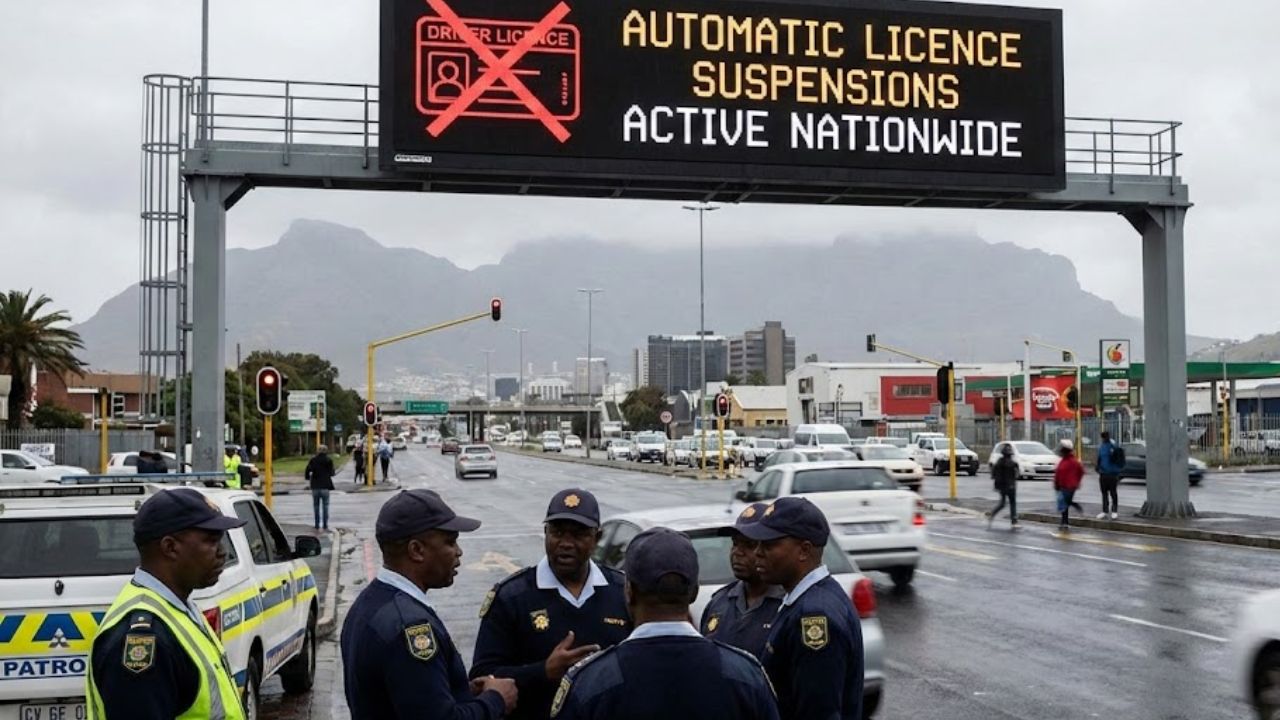
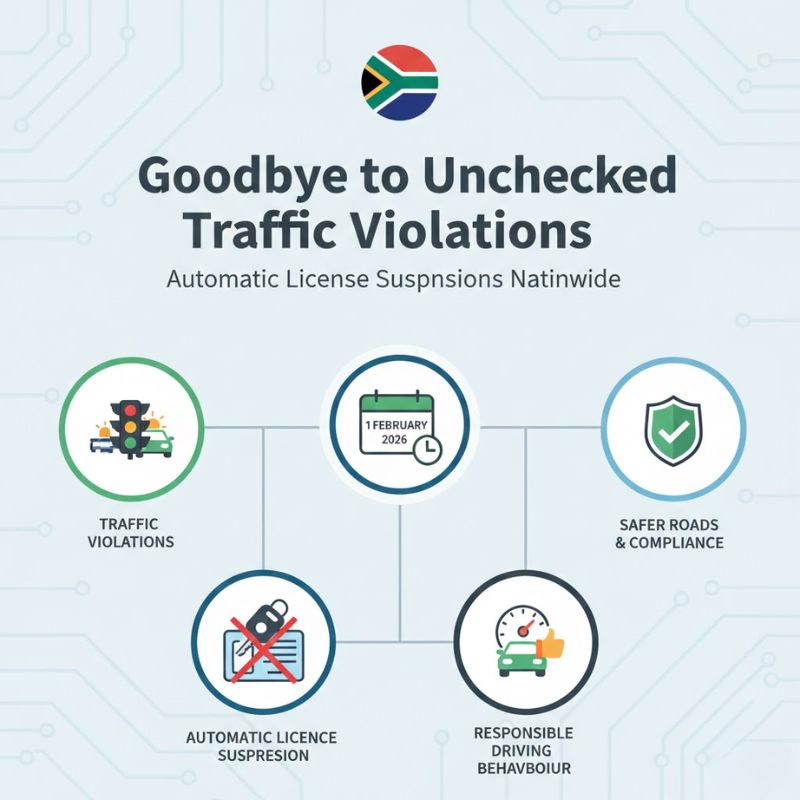
From 1 February 2026, South Africa is rolling out a nationwide shift in how traffic violations are enforced, with automatic licence suspensions replacing the old, slower systems. The change is designed to close long-standing gaps where unpaid fines or repeated offences went unnoticed for months. By linking enforcement databases in real time, authorities aim to improve road safety, encourage faster compliance, and reduce administrative delays. For everyday drivers, this marks a major reset in expectations, making it more important than ever to stay on top of tickets, demerit points, and official notices.

Automatic licence suspension rules for traffic violations
Under the new framework, traffic offences in South Africa will trigger swift consequences once thresholds are crossed. Instead of waiting for manual reviews, the system flags repeated or serious violations automatically. Drivers who ignore fines or accumulate points may face instant suspension triggers, removing guesswork from enforcement. Authorities say this creates real-time enforcement links between courts and licensing bodies. The goal is faster accountability outcomes without lengthy appeals backlogs. While the approach sounds strict, officials argue it promotes consistent national standards and treats all motorists equally.
How unpaid fines lead to licence suspension
One of the biggest shifts involves unpaid penalties. Previously, overdue fines could sit idle for months, but now they feed directly into the suspension process. Once deadlines pass, unpaid fine escalation begins automatically. Drivers will receive digital notice alerts before action is taken, but ignoring them carries risk. The system applies uniform penalty thresholds, meaning repeat delays add up quickly. Officials believe this encourages timely payment behaviour while cutting down on costly enforcement follow-ups.
 NSFAS Loan Forgiveness Starts 4 February: 67,000 Students Get Debt Relief and Next Steps to Follow
What drivers must do before February 2026
Preparation is key as the switch-on date approaches. Motorists should review their records and clear outstanding issues early. Checking online portals allows early record verification and avoids last-minute surprises. Updating contact details ensures accurate notification delivery when warnings are issued. Experts recommend building proactive compliance habits, especially for frequent drivers. By taking these steps, South Africans can ensure smoother licence continuity when the automated system becomes active.
Summary and road safety impact
This reform signals a broader move toward data-driven enforcement across South Africa. By removing delays, authorities expect reduced repeat offences and clearer consequences for unsafe driving. Supporters highlight improved public safety as a long-term benefit, while critics urge transparency. For drivers, the message is simple: administrative gaps closed means responsibility can no longer be deferred. Staying informed and responsive will be essential in this new compliance era.
| Area | Old System | New System |
|---|---|---|
| Fine Tracking | Manual follow-up | Automated monitoring |
| Suspension Timing | Delayed action | Immediate trigger |
| Driver Notices | Mail-based | Digital alerts |
| National Consistency | Varied by region | Unified approach |
| Administrative Cost | Higher | Lower |
Frequently Asked Questions (FAQs)
1. When do automatic licence suspensions start?
The new system activates nationwide on 1 February 2026.

2. Will drivers receive a warning before suspension?
Yes, digital notices are sent before any licence action occurs.
3. Do unpaid fines immediately suspend a licence?
Suspension happens only after set deadlines and thresholds are missed.
4. How can drivers avoid issues under the new rules?
By checking records regularly and paying fines promptly.